A few years ago, most developers used to build quietly.
You worked silently.
Learned silently.
Failed silently.
And only after becoming “successful” did people share their story.
But now something interesting is happening on the internet.
Developers are sharing:
- startup progress
- coding struggles
- failed launches
- bugs
- lessons
- revenue screenshots
- product updates
- learning journeys
publicly.
This concept is called:
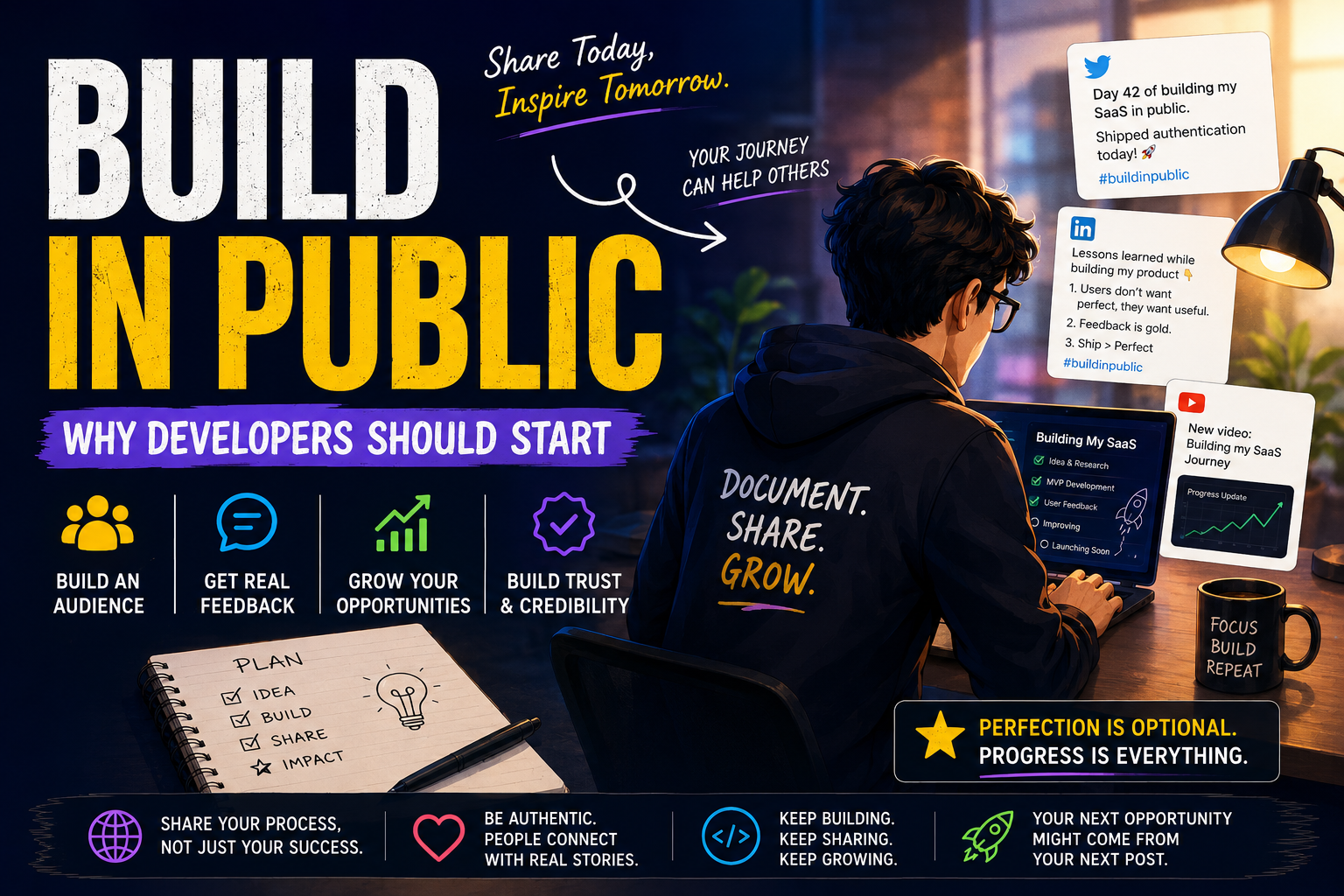
Build in Public
And honestly?
At first, I thought this trend was just another social media hype cycle.
But over time, after observing founders, indie hackers, creators, and developers closely, I realized something powerful:
Building in public is not just marketing.
It changes how people grow.
Completely.
In this article, I’ll explain:
- what build in public actually means
- why developers should care
- how it helps startups grow
- mistakes people make
- what I personally learned
- practical ways to start
And I’ll explain everything honestly — not like fake motivational startup Twitter content.
Let’s start.
What Does “Build in Public” Actually Mean?
Simple meaning:
You publicly share your journey while building something.
That “something” could be:
- startup
- SaaS
- portfolio
- open-source project
- learning journey
- coding challenge
- content brand
Instead of waiting for perfect success…
you share:
- progress
- failures
- updates
- experiments
- lessons
in real time.
My First Reaction to Build in Public
Honestly?
I initially thought:
“Why would anyone share unfinished work publicly?”
I felt:
- insecure
- underprepared
- worried about judgment
And many developers feel same.
Especially beginners.
You think:
- “I’m not skilled enough yet.”
- “Nobody will care.”
- “What if people criticize me?”
Completely normal feelings.
But over time I realized:
People connect more with progress than perfection.
That changed my perspective heavily.
Why Developers Usually Stay Silent
Developers often avoid public sharing because:
- fear of criticism
- imposter syndrome
- perfectionism
- comparison
- privacy concerns
And honestly…
coding culture traditionally rewarded:
silent grinding.
But internet culture changed.
Now visibility matters too.
Why Build in Public Became So Popular
Because the internet became crowded.
Thousands of developers are building:
- apps
- SaaS products
- AI tools
- portfolios
every single day.
Simply building quietly is often not enough anymore.
People need:
- trust
- story
- visibility
- connection
Build in public naturally creates these things.
The Biggest Misunderstanding
Many people think:
“Build in public means flexing.”
Wrong.
Real build in public is usually:
- honest
- messy
- experimental
- educational
The best creators share:
- struggles
- confusion
- failures too
That authenticity matters hugely.
My Experience Watching Public Builders
One thing surprised me.
Developers sharing consistently often grew faster in:
- opportunities
- networking
- learning
- confidence
- audience building
Not because they were always smartest…
but because people could SEE their journey.
Visibility compounds.
Why Developers Should Build in Public
This is where things get interesting.
The benefits go far beyond:
- likes
- followers
Build in public creates real leverage.
1. You Build Accountability
This one is underrated.
When you publicly share:
- goals
- progress
- milestones
you naturally become more consistent.
Because now your brain knows:
“People are watching.”
That pressure can become powerful motivation.
Real Example
When developers publicly post:
- “Day 14 of building my SaaS”
they’re more likely to continue than someone working invisibly.
Consistency improves.
2. You Build Audience Before Product
This is HUGE for startups.
Most founders build product first…
then struggle desperately finding users later.
Build in public reverses this slightly.
You gradually build:
- community
- trust
- attention
while building product itself.
That’s extremely valuable.
Why Audience Matters So Much
Internet rewards distribution heavily.
Even amazing products fail if:
- nobody knows they exist.
An audience creates:
- early users
- feedback
- testers
- supporters
before launch.
Massive advantage.
3. You Learn Faster
This surprised me personally.
Public sharing attracts:
- feedback
- advice
- corrections
- suggestions
People often point out:
- better tools
- mistakes
- improvements
- resources
You accelerate learning naturally.
My Learning Realization
Initially I thought learning should happen privately first.
Now honestly?
Public learning often improves understanding faster because:
- discussions happen
- explanations improve
- feedback loops become stronger
4. Networking Happens Naturally
This part is incredibly underrated.
Developers constantly ask:
“How do I network?”
Honestly?
Build in public is one of the best networking systems.
Because people discover you through:
- shared interests
- consistent updates
- visible projects
Connections become organic.
Real Internet Truth
People connect more easily with:
- visible builders
than invisible developers.
Visibility creates opportunities.
5. You Create Portfolio Proof
This matters hugely for developers.
Anyone can SAY:
- “I’m learning React.”
But public building shows:
- actual consistency
- real projects
- progress over time
Much stronger credibility.
Why Recruiters & Founders Notice Public Builders
Because public work demonstrates:
- initiative
- communication
- execution
- consistency
These traits matter heavily in tech.
6. You Improve Communication Skills
Developers often underestimate communication.
Huge mistake.
Public sharing forces you to explain:
- technical concepts
- decisions
- progress
- problems
Over time communication improves massively.
And honestly?
Strong communication creates huge career advantage.
My Biggest Communication Lesson
Initially my explanations were:
- confusing
- too technical
- poorly structured
Public writing gradually improved this naturally.
Teaching clarifies thinking.
7. You Become More Comfortable With Failure
This part emotionally changes people.
When building privately:
- every failure feels huge
When building publicly:
you realize:
- everyone struggles
- everyone gets stuck
- everyone ships imperfect work
That normalizes failure.
Very healthy mentally.
Mistakes I Made About Building in Public
Definitely several.
1. Waiting to “Become Expert First”
Classic mistake.
I thought:
“I’ll share once I’m successful.”
But audiences often connect MORE with learning journeys.
2. Trying to Look Too Perfect
Bad idea.
Overly polished content feels:
- fake
- corporate
- disconnected
Realness works better.
3. Comparing Growth Constantly
Dangerous trap.
Some creators grow fast.
Others slow.
Focus on consistency instead.
4. Posting Without Actual Building
Very important.
Build in public should include:
- real execution
Not endless motivational posting.
5. Caring Too Much About Numbers
Initially:
- low likes
- low engagement
can feel discouraging.
But consistency compounds slowly.
What I Learned About Internet Growth
One huge realization:
The internet rewards:
- consistency
- authenticity
- long-term visibility
more than short-term perfection.
Many creators grow slowly…
then suddenly opportunities compound heavily.
What Should Developers Share?
This part confuses beginners often.
You do NOT need:
- massive achievements
- startup funding
- advanced expertise
You can share:
- learning progress
- debugging stories
- UI improvements
- deployment struggles
- startup lessons
- coding experiments
- feature updates
- mistakes
Simple authentic updates work surprisingly well.
Real Content Ideas
Examples:
- “Built authentication today.”
- “Spent 3 hours fixing this API bug.”
- “Learned Docker finally.”
- “Launching MVP this week.”
- “Biggest mistake I made while learning React.”
Simple.
Human.
Relatable.
Best Platforms for Building in Public
Depends on your style.
X
Most popular for startup builders and developers.
Fast updates.
Tech audience.
Strong networking.
Great for:
- professional visibility
- career opportunities
- startup storytelling
Especially underrated for developers honestly.
GitHub
Public repositories themselves are build-in-public signals.
People can see:
- commits
- progress
- projects
- experimentation
Very powerful.
YouTube
Longer-form journey content works very well here.
Especially:
- coding journeys
- startup building
- developer vlogs
Surprisingly useful now for:
- developer branding
- startup storytelling
- short-form reels
Especially younger audiences.
Build in Public vs Showing Off
This line matters.
Healthy build in public:
- shares journey honestly
Toxic build in public:
- performs fake success constantly
People usually sense authenticity eventually.
Real stories connect more deeply.
The Psychological Shift That Happens
This surprised me most honestly.
Public sharing changes how you think.
You become more:
- intentional
- reflective
- disciplined
- communicative
Because now:
- your work becomes visible
That visibility changes behavior naturally.
Why Developers Need Visibility Today
This is important.
Modern tech opportunities increasingly come from:
- visibility
- audience
- online presence
- public proof of work
Not only resumes.
Especially for:
- freelancers
- startup founders
- indie hackers
- creators
Public presence creates leverage.
Real Advice for Introverted Developers
You don’t need to become:
- loud
- fake
- hyper-social
Build in public can still be:
- calm
- thoughtful
- educational
Simple honest updates are enough.
Consistency matters more than personality type.
How to Start Building in Public (Simple Process)
Don’t overcomplicate.
Start with:
- one platform
- one project
- one update daily/weekly
That’s enough initially.
Example Beginner Workflow
Week 1:
- announce project
Week 2:
- share progress screenshots
Week 3:
- discuss bug you solved
Week 4:
- share lesson learned
Simple.
Natural.
Sustainable.
The Future of Build in Public
Honestly?
This movement will probably grow even more.
Because internet increasingly values:
- transparency
- authenticity
- visible execution
And AI-generated content is making:
- real human journeys
more valuable.
People connect with humans, not polished perfection.
Final Thoughts
Building in public is not really about:
- becoming internet famous
- showing off
- pretending success
At its best, it’s about:
- sharing growth
- documenting learning
- connecting with people
- creating accountability
- building trust over time
And honestly…
many developers underestimate how much public sharing can change:
- opportunities
- confidence
- learning speed
- career growth
The internet rewards visible builders more than silent perfectionists.
That’s becoming increasingly true.
