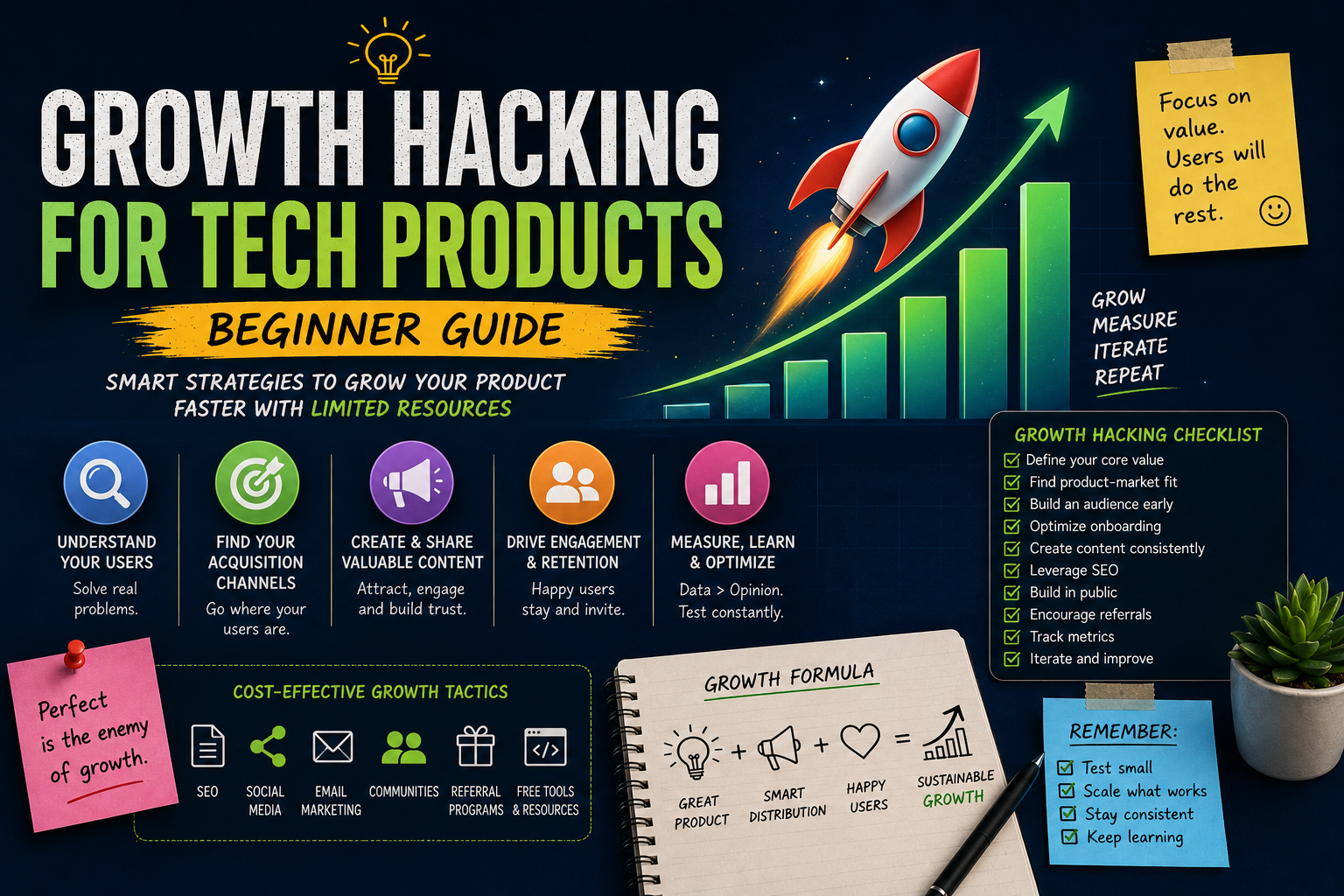
One of the most frustrating moments as a developer is this:
You finally launch your product after weeks or months of hard work…
And nobody shows up.
No traffic.
No users.
No signups.
Nothing.
Just you refreshing analytics every 15 minutes hoping magically some visitor appears from somewhere.
I still remember those moments very clearly because honestly, they hurt more than coding bugs sometimes.
At least bugs have solutions.
But when your product gets ignored completely, it creates a different kind of frustration. You start questioning everything:
- Is the product bad?
- Was the idea useless?
- Am I wasting time?
- Why are other startups growing while mine stays invisible?
And the worst part is this happens to almost every beginner founder.
Nobody talks about it honestly enough.
People online mostly show:
- launch screenshots
- revenue milestones
- traffic spikes
- “10k users in 30 days” posts
But very few explain the awkward silent phase where you’re basically shouting into the internet and nobody notices.
That’s where growth hacking becomes important.
Now before you imagine spammy marketing tricks or fake “viral hacks,” let me clarify something:
Real growth hacking is not about manipulation.
It’s about finding creative, low-cost, practical ways to grow your product consistently when you don’t have:
- big funding
- marketing teams
- expensive ads
- large audiences
Especially for beginner founders and solo developers, growth hacking is survival.
Because building a good product alone is no longer enough.
Distribution matters just as much now.
Maybe more.
This article is everything I wish someone had explained to me earlier about growing tech products realistically as a small founder without fake guru advice or “just go viral” nonsense.
Because honestly… most growth happens through experimentation, patience, small wins, and learning how internet attention actually works.
Why Growth Hacking Matters More Than Beginners Think
Most developers underestimate marketing badly.
I did too.
When I started building projects seriously, I genuinely believed:
“If the product is good, users will naturally come.”
Completely wrong.
The internet is overcrowded now.
Every day people launch:
- AI tools
- SaaS products
- apps
- websites
- Chrome extensions
- productivity tools
Thousands of them.
Users are overloaded with choices.
That means visibility itself becomes a challenge.
And this creates a painful reality developers slowly discover:
A mediocre product with strong distribution often beats a great product nobody discovers.
That realization changed my mindset completely.
Now whenever I think about products, I think about two things together:
- Building
- Distribution
Because both are connected.
What Growth Hacking Actually Means
Growth hacking sounds like some mysterious startup term, but honestly the core idea is simple.
It means finding smart, fast, affordable ways to grow users through experimentation.
That’s it.
Not huge corporate campaigns.
Not massive ad budgets.
Just practical growth strategies.
For example:
- SEO content
- referral systems
- launch communities
- social content
- waitlists
- free tools
- product-led growth
- email capture
- community engagement
Growth hacking is basically:
“How can we grow efficiently with limited resources?”
And this mindset is extremely important for beginner founders.
My Experience: The Biggest Mistake I Made
My biggest early mistake was thinking growth starts after product completion.
Huge mistake.
I would spend months building silently.
Then suddenly launch expecting attention.
Nobody cared.
Why?
Because internet attention doesn’t work like movie scenes.
People don’t magically discover random products.
There must be:
- visibility
- trust
- awareness
- distribution
I learned this painfully after launching projects that technically worked well but received almost zero traffic initially.
That experience forced me to understand something uncomfortable:
Coding is only half the job.
Sometimes not even half.
You also need:
- audience
- positioning
- messaging
- discoverability
That realization honestly frustrated me initially because as developers we naturally prefer building over marketing.
Marketing feels uncertain.
Coding feels controllable.
But eventually I realized growth itself is also a skill.
Learnable.
Testable.
Improvisable.
The Biggest Myth About Growth Hacking
Many beginners think growth hacking means:
“Find one viral trick.”
Not true.
Most sustainable growth comes from compounding small actions consistently.
The internet romanticizes virality too much.
Reality is slower.
Usually growth comes from:
- publishing regularly
- improving SEO
- engaging communities
- refining onboarding
- improving retention
- understanding users deeply
Small improvements compound over time.
That’s less exciting than “overnight success,” but far more realistic.
Why Most Tech Products Fail to Grow
This section hurts a little because I’ve made almost all these mistakes personally.
1. Building Without Distribution Planning
This is the biggest developer mistake.
We obsess over features while ignoring:
“How will people discover this?”
Traffic is not automatic.
Especially today.
Now whenever evaluating ideas, I immediately ask:
- Where are the users?
- How do they currently discover products?
- Can SEO work here?
- Are communities active?
- Is content possible?
Without distribution strategy, growth becomes random luck.
2. Trying to Target Everyone
Beginners often position products too broadly.
“AI productivity app for everyone.”
Bad positioning.
Growth becomes easier when messaging feels specific.
Specific audiences respond better because the problem feels personal.
For example:
- productivity tool for students
- invoicing tool for freelancers
- CRM for local institutes
Niche clarity improves growth massively.
3. Launching Too Quietly
I used to launch products silently.
No content buildup.
No audience warmup.
No anticipation.
Then I’d wonder why traffic stayed low.
Now I think launching should start before launch day itself.
Talk publicly.
Share progress.
Discuss problems.
Create curiosity.
Attention compounds slowly.
What I Learned About Real Growth
One lesson became painfully obvious over time:
Growth is deeply connected to psychology.
Users don’t share products because your code is beautiful.
They share products because:
- it saves time
- it feels useful
- it feels impressive
- it solves frustration
- it makes them look smart
Understanding emotional behavior matters massively.
This realization changed how I think about products completely.
Step-by-Step Beginner Growth Hacking Strategy
This is the practical system I honestly wish someone had explained properly earlier.
Step 1: Build Something People Actually Need
Growth hacking cannot permanently save useless products.
Harsh but true.
If users don’t genuinely care about the problem, growth becomes extremely difficult.
This is why validation matters first.
Strong products create:
- retention
- referrals
- organic sharing
Weak products depend endlessly on forced promotion.
Step 2: Start Building Audience Before Launch
This changes everything.
Don’t wait until launch to exist online.
Share:
- progress
- lessons
- struggles
- screenshots
- development journey
People connect with stories.
Especially indie founder journeys.
And honestly… transparency builds trust faster than polished branding sometimes.
Step 3: Use SEO Early
SEO is slow initially but powerful long-term.
One thing I regret is not taking SEO seriously earlier.
Content compounds.
A single article can bring users for years.
For tech products, SEO opportunities include:
- tutorials
- problem-solving content
- comparison articles
- beginner guides
- industry pain points
Especially for bootstrapped founders, SEO becomes a growth asset.
Step 4: Build Free Useful Tools
This strategy works surprisingly well.
Free tools attract:
- backlinks
- traffic
- trust
- discoverability
Examples:
- calculators
- generators
- templates
- converters
- mini utilities
People love useful free things.
And free tools naturally introduce users to larger products.
Step 5: Launch in Communities Carefully
Communities can create early traction.
But beginners often spam links everywhere.
Bad approach.
Instead:
- contribute genuinely
- help people
- discuss problems
- build trust first
Then product mentions feel natural.
Communities reward authenticity surprisingly fast.
Step 6: Improve Onboarding Ruthlessly
Growth is not only about getting users.
Retention matters more.
Many products leak users because onboarding feels confusing.
If users don’t quickly understand value, they leave.
Simple onboarding wins.
Always ask:
“How fast can users experience usefulness?”
That question matters massively.
Step 7: Track Behavior
Analytics changed my perspective completely.
Sometimes features you think users love get ignored.
Sometimes tiny features become unexpectedly valuable.
Data reveals reality.
Important metrics:
- retention
- signup conversion
- traffic sources
- bounce rate
- onboarding completion
Growth becomes smarter when decisions use behavior instead of assumptions.
Biggest Growth Hacking Mistakes I Made
Chasing Every Platform Simultaneously
Twitter.
LinkedIn.
YouTube.
Instagram.
Reddit.
SEO.
I tried everything at once.
Result?
Inconsistency everywhere.
Now I think beginners should focus on one or two channels properly first.
Depth matters more than scattered effort.
Ignoring Retention
Getting users feels exciting.
Keeping users is harder.
I once obsessed over traffic while existing users quietly stopped using the product.
Painful lesson.
Retention is growth.
Happy users compound naturally.
Posting Without Value
Another common beginner mistake.
Just posting:
“Hey check my startup.”
Nobody cares.
Content should help, teach, entertain, or emotionally connect first.
Attention is earned.
Real-World Growth Hacking Examples
Let’s say you build a platform helping students compare institutes.
Weak growth approach:
Run random ads immediately.
Better growth approach:
- create SEO articles around institute searches
- post educational comparison content
- build city-specific landing pages
- answer student questions publicly
- collect reviews
- optimize local discoverability
Now growth becomes connected to user behavior.
That’s sustainable.
The Emotional Side of Growing Products
This part deserves honesty.
Growth can feel emotionally exhausting.
Especially during slow phases.
You post content…
Barely engagement.
You launch features…
Users ignore them.
You improve onboarding…
Metrics barely move.
This uncertainty mentally drains founders.
I’ve had phases where I refreshed analytics constantly hoping for signs of traction.
Not healthy honestly.
But over time I realized growth is usually slower and less dramatic than internet success stories suggest.
Small consistent improvements matter more.
What Actually Creates Sustainable Growth
After lots of mistakes, a few patterns became very clear.
Useful Products Grow Easier
Seems obvious.
Still important.
Growth becomes much easier when users genuinely benefit.
Strong usefulness creates:
- retention
- recommendations
- organic sharing
Product quality still matters massively.
Content Is a Long-Term Asset
This realization changed everything for me.
Content compounds.
Tweets disappear quickly.
Ads stop working once money stops.
But:
- blogs
- tutorials
- YouTube videos
- SEO pages
Can keep bringing users for years.
Especially for bootstrapped startups, content becomes leverage.
Simplicity Wins
Complicated messaging kills growth.
Users should quickly understand:
- what product does
- who it helps
- why it matters
Clarity beats cleverness.
Always.
Growth Hacking Strategies Beginners Should Try
Here are practical beginner-friendly strategies that genuinely work.
Build in Public
Share:
- progress
- failures
- screenshots
- lessons
People connect emotionally with journeys.
This also creates accountability.
Create Problem-Focused Content
Don’t only promote features.
Talk about:
- frustrations
- workflows
- solutions
- industry pain points
People search for problems before products.
Use Waitlists
Waitlists create:
- curiosity
- feedback
- early audience
Even small waitlists help psychologically because they create momentum.
Optimize SEO Basics
Simple improvements matter:
- fast website
- proper headings
- keyword targeting
- internal linking
- useful content
SEO is boring initially.
Then suddenly powerful later.
Ask Users Questions
Growth improves when users feel heard.
Simple questions reveal:
- confusion
- missing value
- feature priorities
Good founders listen constantly.
Future of Growth Hacking
AI is changing growth strategies rapidly.
Content creation is easier now.
Software development is faster now.
That means competition increases too.
So what becomes valuable?
Authenticity.
Trust.
Community.
Human connection.
Unique insight.
People are getting overwhelmed by generic AI-generated content.
Real experiences stand out more now.
Founder storytelling matters more than ever.
Real Advice I Wish Someone Told Me Earlier
Don’t obsess over virality.
Obsess over usefulness and consistency.
Viral spikes feel exciting but sustainable systems matter more.
Another important thing…
Stop comparing your early growth to companies already years ahead.
That comparison destroys motivation quickly.
Most products grow slowly initially.
And maybe the biggest lesson:
Marketing is not “selling out.”
If your product genuinely helps people, growth is simply helping more users discover it.
That mindset removed a lot of internal resistance for me.
Note:
Growth hacking sounds fancy online, but honestly the core idea is simple:
Find practical ways to consistently connect useful products with the right people.
That’s it.
No magic formulas.
No guaranteed virality.
No secret tricks.
Just:
- experimentation
- patience
- learning
- consistency
- understanding users deeply
And maybe the most important thing I learned:
Products rarely fail only because of weak code.
Many fail because nobody discovers them.
Distribution matters.
Attention matters.
Trust matters.
So if you’re building tech products today, learn growth alongside coding.
Both skills together become extremely powerful.
